A power rack (also known as a power cage or squat rack) is the cornerstone of any serious home gym setup. This versatile piece of equipment provides a safe, stable environment for compound movements like squats, bench presses, and deadlifts while offering attachment points for various exercises that would otherwise require a full commercial gym setup.
Why Every Home Gym Needs a Power Rack
The value of a power rack extends far beyond its ability to hold a barbell. These robust structures enable you to train with heavy weights safely, even when working out alone. Safety pins and spotter arms catch the bar if you fail a rep, preventing injury and allowing you to push your limits with confidence.
Modern power racks offer remarkable versatility through compatibility with attachments like pull-up bars, cable systems, dip stations, and storage pegs. What once required an entire commercial gym can now fit in a dedicated corner of your garage or basement.
Understanding Power Rack Specifications
Weight Capacity and Steel Gauge
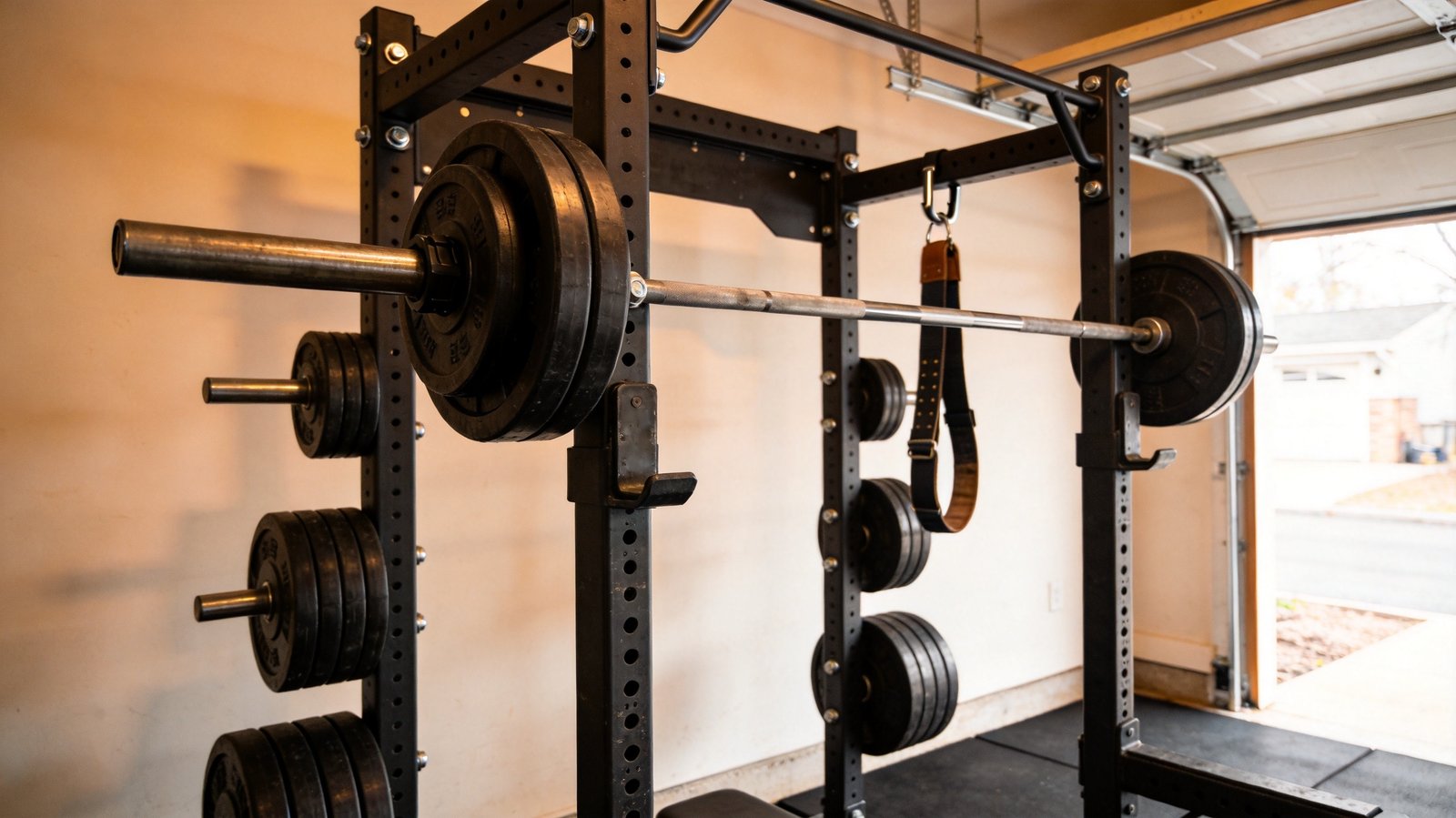
The structural integrity of a power rack depends primarily on two factors: the steel gauge (thickness) and the overall design. Higher gauge steel (lower number) indicates thicker, stronger steel. Look for racks with at least 2″ x 2″ or 3″ x 3″ uprights made from 14-16 gauge steel for stability during heavy lifts.
J-Hook and Safety Spotter Design
The quality of J-hooks and safety spotter arms significantly impacts usability. UHMW (ultra-high molecular weight polyethylene) plastic inserts protect your barbell knurling and provide a secure resting position. Look for safety spotters with sufficient height range to accommodate different exercises and user heights.
Height and Space Requirements
Standard power racks stand between 80-90 inches tall. Before purchasing, measure your ceiling height, including any clearance needed for standing on tiptoes during pull-ups. Floor space typically ranges from 4×4 feet to 5×5 feet, though some designs offer more compact footprints.
Top Power Rack Recommendations for 2026
1. Mikolo Power Cage with Dual Pulley System
ASIN: B0CV3JCD8Z
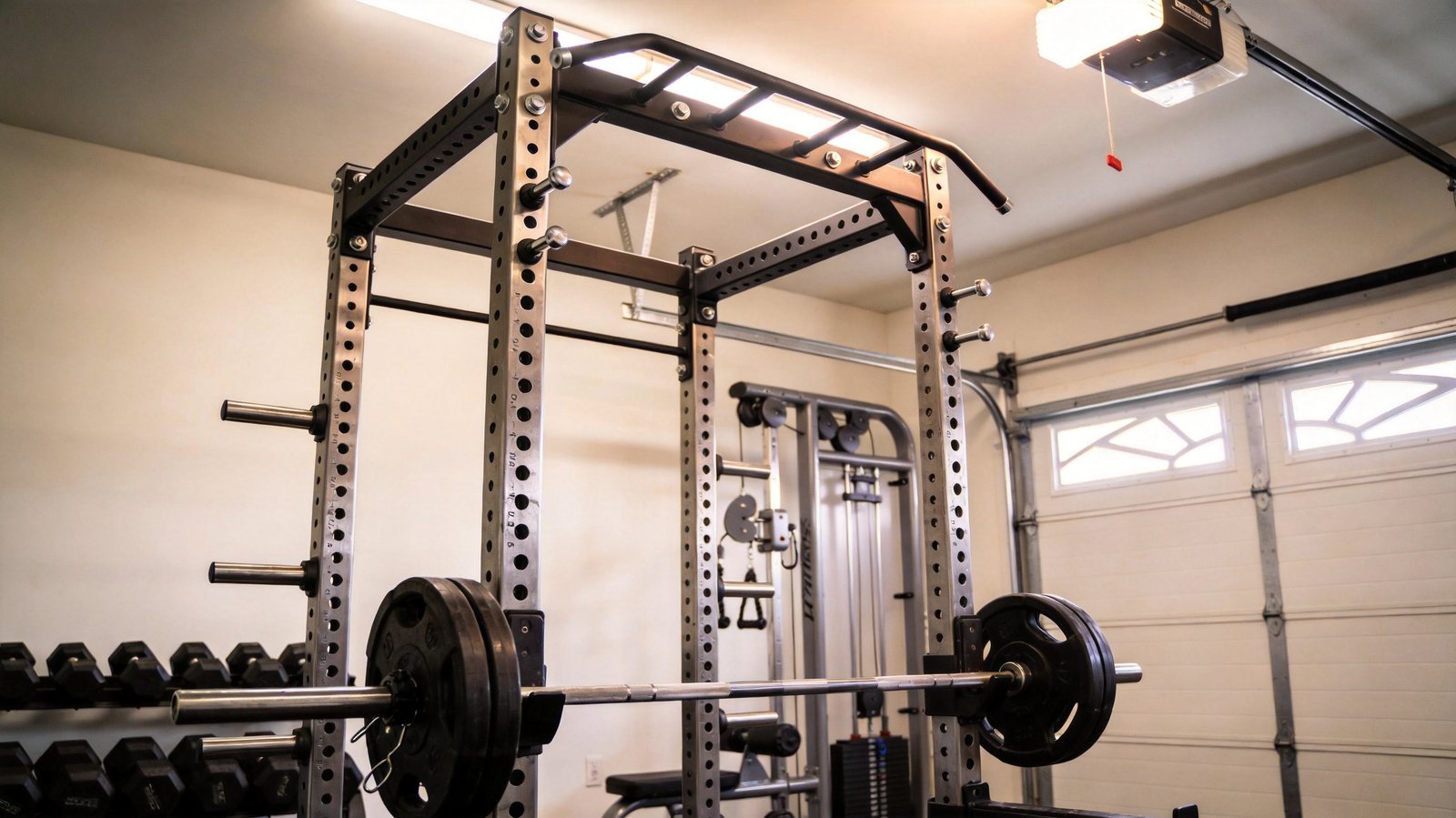
The Mikolo Power Cage stands out with its impressive 2000 lb weight capacity and innovative dual pulley system. This all-in-one solution combines the functions of a power rack with cable crossover capabilities, eliminating the need for separate machines.
Key Specifications:
- 2000 lb weight capacity
- 86″ height with 30 height positions (1″ spacing)
- 2″ x 2″ steel uprights (2mm tube thickness)
- Independent dual pulley system (150 lb per side)
- Includes pull-up bar, J-hooks, and safety bars
Pros:
- Exceptional weight capacity for serious lifters
- Built-in cable crossover system adds versatility
- Sturdy construction with minimal wobble
- Multiple attachment points for accessories
- 2-year warranty
Cons:
- Higher price point
- Requires significant floor space
- Assembly can be time-consuming
2. Sportsroyals Power Cage with Cable Crossover
ASIN: B0CPP4L531
The Sportsroyals Power Cage offers professional-grade construction at a competitive price point. Its adjustable cable crossover system and multiple training attachments make it an excellent choice for those seeking comprehensive home gym functionality.
Key Specifications:
- 1500-1600 lb weight capacity
- 83.5″ height
- Alloy steel construction
- Adjustable cable system with multiple height positions
- 16 height options for J-hooks and safety bars
Pros:
- Excellent value for features offered
- Versatile cable crossover integration
- Fast assembly (approximately 1 hour)
- Sturdy enough for serious training
- Space-efficient design (53.5″ x 46.9″)
Cons:
- Pulley weight stacks not included
- May require additional safety accessories
- Limited color options
3. Bongkim Power Rack
ASIN: B0CDC58P76
The Bongkim Power Rack provides reliable strength training functionality at an accessible price point. This straightforward power cage focuses on essential features without unnecessary complexity, making it ideal for beginners building their first home gym.
Key Specifications:
- 660 lb weight capacity
- 81.9″ height
- Steel construction with powder coat finish
- Adjustable safety bars and J-hooks
- Compact footprint
Pros:
- Budget-friendly option
- Simple, straightforward design
- Easy assembly
- Compact size for smaller spaces
- 1-year warranty
Cons:
- Lower weight capacity limits advanced training
- Fewer attachment points
- Basic J-hook design
Power Rack Comparison Table
| Model | Capacity | Height | Footprint | Special Features | Best For |
|---|---|---|---|---|---|
| Mikolo HR05 | 2000 lbs | 86″ | 4′ x 4′ | Dual pulley system | Advanced users |
| Sportsroyals | 1500 lbs | 83.5″ | 4.5′ x 4′ | Cable crossover | Versatile training |
| Bongkim | 660 lbs | 81.9″ | 3.6′ x 3.6′ | Basic setup | Beginners |
Choosing the Right Power Rack for Your Needs
For Advanced Lifters and Serious Athletes
If you’re training for powerlifting competitions or pursuing maximum strength, prioritize racks with the highest weight capacities and thickest steel gauges. The Mikolo Power Cage with its 2000 lb capacity and dual pulley system provides the stability and versatility needed for serious strength training.
For Home Gym Enthusiasts
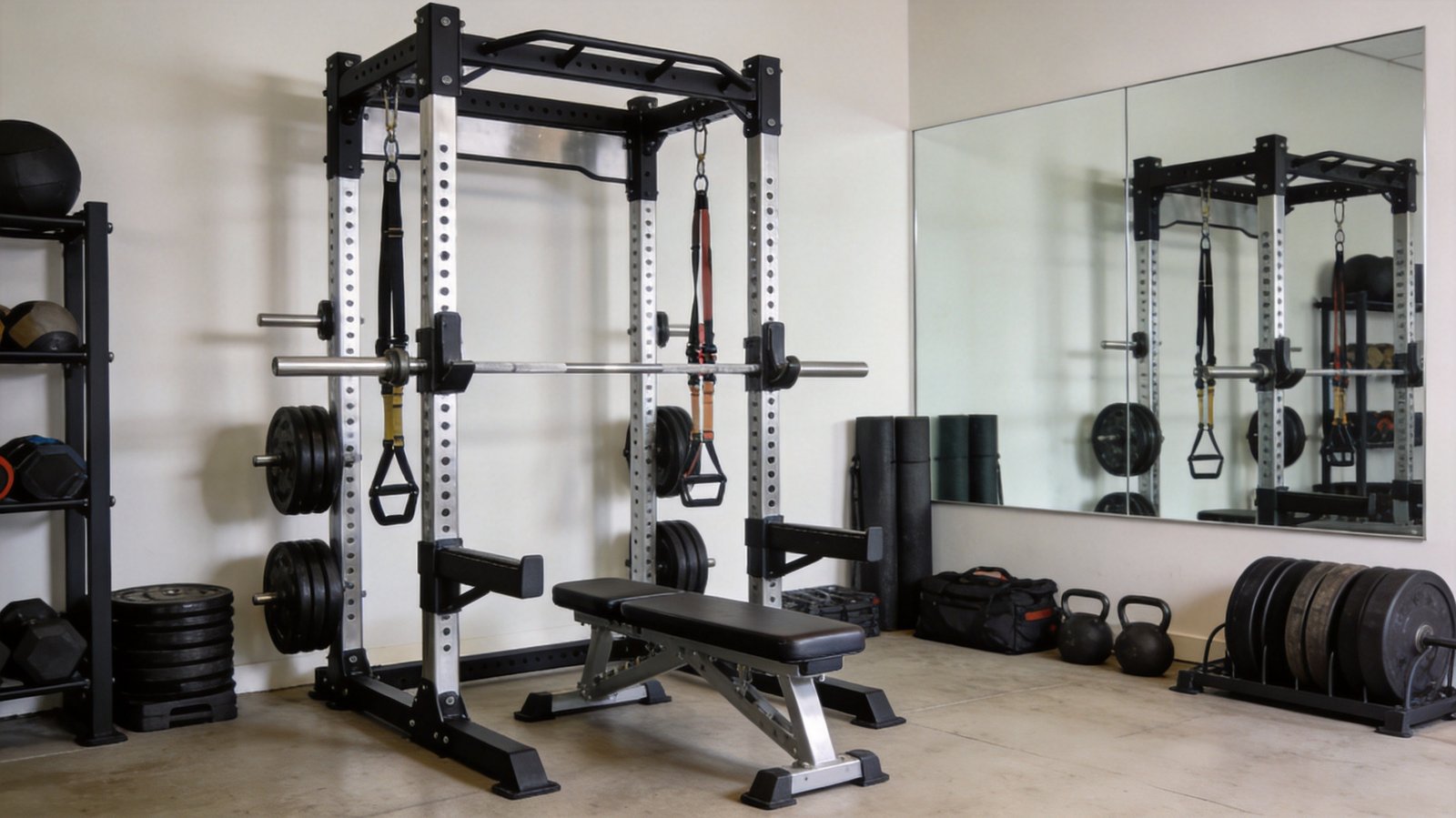
Those seeking a comprehensive home gym solution should look for racks that offer good expandability through attachments. Cable crossover compatibility, pull-up bar variations, and dip station capabilities add significant training options without requiring additional floor space.
For Beginners and Budget Buyers
Starting your fitness journey? A basic power rack like the Bongkim provides essential safety and functionality at an accessible price. You can always upgrade to more advanced equipment as your training progresses.
Essential Attachments and Accessories
Maximize your power rack investment with these valuable additions:
- Pull-Up Bars: Multiple grip variations (wide, narrow, neutral) target different muscle groups
- Safety Spotter Arms: Catch failed lifts safely without requiring a spotter
- Band Pegs: Enable resistance band training for accommodating resistance
- Weight Storage: Keep your Olympic plates organized and accessible
- Lat Pulldown Attachment: Adds back training options to your rack
- Dip Station: Upper chest and tricep development
Installation and Safety Considerations
Proper setup ensures safe, effective training:
- Floor Anchoring: Bolt your rack to the floor for maximum stability during heavy lifts
- Level Surface: Ensure your rack stands perfectly level on a solid floor surface
- Ceiling Height: Verify adequate clearance for pull-ups and overhead movements
- Wall Clearance: Maintain at least 12 inches from walls for cable operation
- Weight Plate Clearance: Ensure sufficient room to load and unload plates safely
Maintenance and Care
Keep your power rack in optimal condition:
- Inspect bolts and hardware monthly, tightening as needed
- Clean J-hooks and safety bars to prevent barbell damage
- Lubricate any moving parts (pulleys, cable posts) periodically
- Check steel for any signs of rust, especially in humid environments
- Replace worn UHMW inserts to maintain smooth bar transitions
Final Recommendations
For most home gym setups, the Sportsroyals Power Cage offers the best balance of features, build quality, and value. Its integrated cable system adds tremendous training versatility without the footprint of separate machines.
However, serious strength athletes will appreciate the Mikolo Power Cage’s superior capacity and dual pulley system, making it our top recommendation for those with the space and budget.
Whatever you choose, a quality power rack will serve as the foundation of your home gym for years to come, supporting your strength training journey from beginner gains to advanced powerlifting goals.
Check current prices using the Amazon links provided above. Availability and pricing may vary.